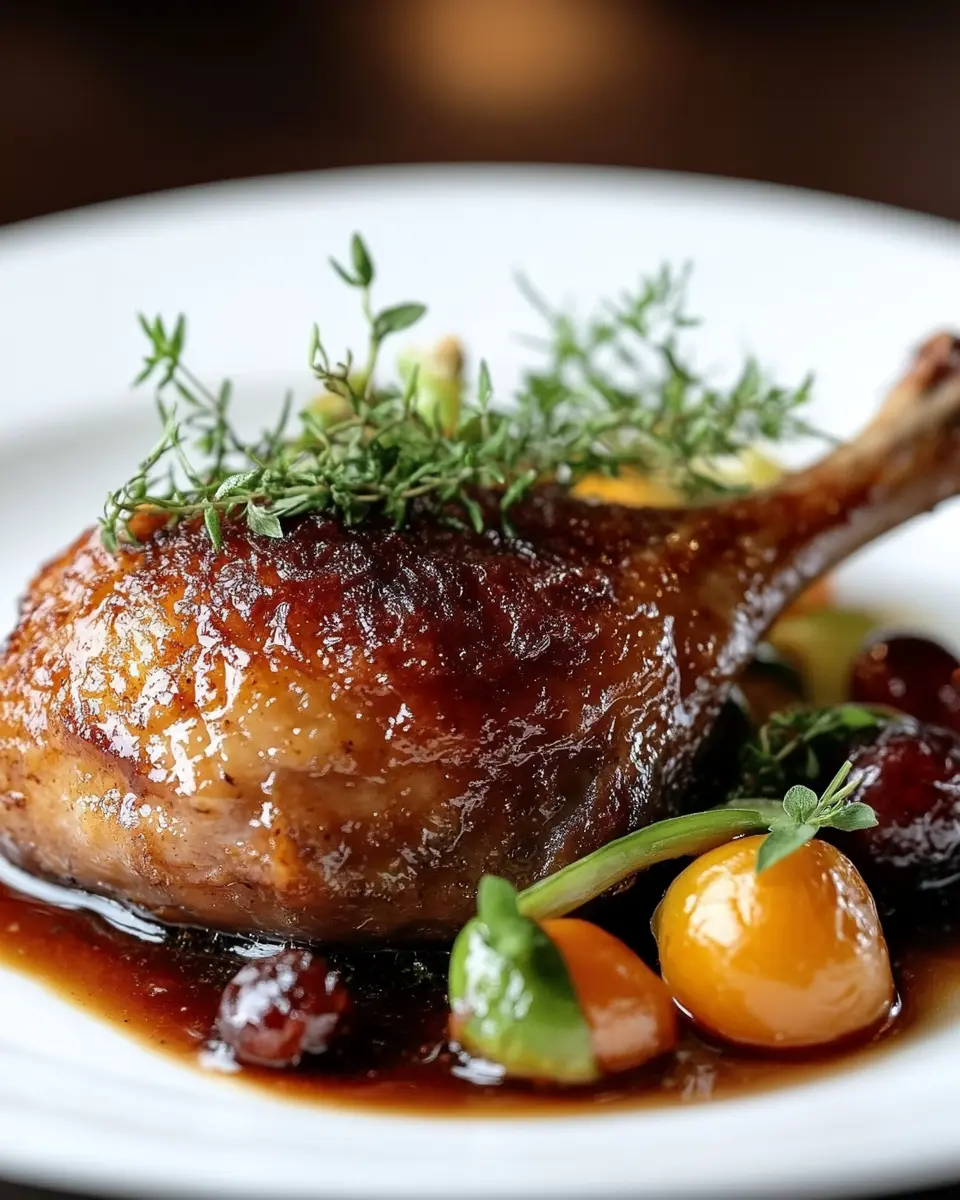
Introduction to Duck Leg Confit
Duck leg confit is a classic French dish that transforms humble duck legs into a tender and flavorful delicacy. The process of confit involves slowly cooking the duck legs in rendered duck fat, which not only preserves the meat but also infuses it with rich flavors. This method has been cherished in French cuisine for centuries, allowing the meat to become melt-in-your-mouth tender while the fat protects it from spoilage.
The Art of Confit
At its core, duck leg confit is about patience and technique. The slow cooking process at low temperatures allows the duck to absorb the flavors of garlic and thyme, creating a harmonious dish that is both comforting and sophisticated. As the duck legs simmer in their own fat, they become infused with a depth of flavor that is hard to replicate with other cooking methods. It’s a dish that speaks to the heart of homemade cooking, perfect for young professionals who appreciate the art of preparing a meal from scratch, even when time is tight.
Cooking with Duck Fat
Rendered duck fat is not just a cooking medium; it’s a flavor powerhouse. This golden fat, which is obtained by slowly cooking duck, has a high smoke point and is ideal for frying or roasting vegetables, adding a luxurious touch to any dish. Furthermore, using duck fat in your cooking not only enhances flavor but also allows you to utilize leftovers creatively, ensuring that nothing goes to waste.
In summary, duck leg confit in rendered duck fat is more than just a recipe; it’s a culinary experience that brings together tradition, flavor, and sustainability. Whether you’re enjoying it on a cozy evening or sharing it with friends, this dish is sure to impress and satisfy. So why not indulge and create this delightful confit at home? Your taste buds will thank you!
Key Ingredients
Duck leg confit is all about the quality of its key ingredients, each playing a vital role in achieving that rich, flavorful experience. Here’s a closer look at what makes this dish truly special.
Duck Legs (4): The star of the dish, duck legs are rich in flavor and become incredibly tender when cooked slowly in fat. Choosing quality, well-farmed duck will enhance the overall taste of your confit.
Rendered Duck Fat (1 cup): This golden fat is essential for confit, as it not only preserves the meat but also infuses it with a deep, savory flavor. Using high-quality rendered duck fat ensures your dish will have that authentic taste.
Garlic (4 cloves, smashed): Garlic adds a fragrant depth to the confit. As it cooks alongside the duck, it mellows and sweetens, blending perfectly with the rich flavors.
Fresh Thyme (1 tablespoon): Thyme brings a subtle earthiness to the dish, complementing the duck’s rich flavor. Fresh herbs are always recommended for the best aroma and taste.
Salt (1 tablespoon): Essential for seasoning, salt enhances the natural flavors of the duck and helps in the curing process before cooking.
Black Pepper (1 teaspoon): A touch of freshly cracked black pepper adds warmth and a mild kick, balancing the richness of the duck fat.
In summary, each ingredient in duck leg confit contributes to its rich flavor profile and tender texture, making it a beloved classic in French cuisine. By choosing high-quality ingredients, you ensure a delicious and satisfying dish that’s worth the time spent preparing it.
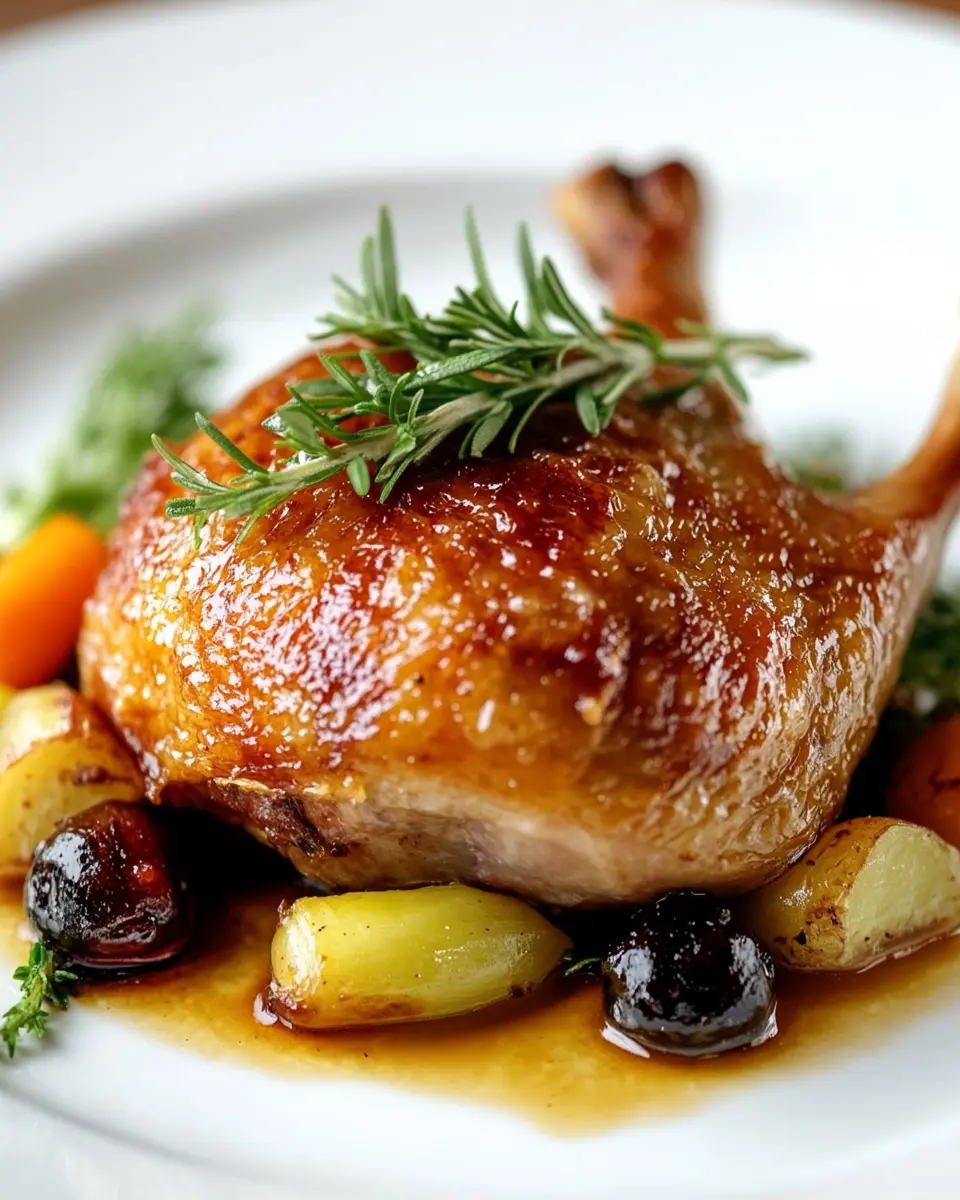
Why You’ll Love This Recipe
Duck leg confit in rendered duck fat is more than just a dish; it’s a culinary experience that combines rich flavors with a comforting texture. This classic French recipe is perfect for young professionals who appreciate the art of homemade cooking, offering a delightful indulgence that feels both luxurious and accessible.
A Simple Yet Elegant Dish
What makes this recipe so appealing is its simplicity. With just a few key ingredients—duck legs, rendered duck fat, garlic, thyme, salt, and pepper—you can create a meal that is both impressive and satisfying. The slow cooking process allows the duck to soak in the flavors, resulting in tender meat that falls off the bone. It’s a dish that’s perfect for cozy nights at home or for entertaining friends and family.
Meal Prep Friendly
For those with busy schedules, this recipe is ideal. You can prepare the confit in advance, allowing it to develop even richer flavors overnight in the refrigerator. Plus, the leftover duck fat can be reused for frying or roasting vegetables, making it a versatile ingredient that enhances other meals. Why not make a batch on the weekend and enjoy it throughout the week?
A Flavor Adventure
The unique combination of garlic and fresh thyme adds a fragrant depth that elevates the dish beyond the ordinary. Each bite is a celebration of flavor, showcasing the beauty of French cuisine in a way that’s approachable and satisfying. Whether served with a side of crispy potatoes or a fresh salad, duck leg confit is sure to impress.
In summary, you’ll love this recipe for its elegant simplicity, meal prep convenience, and rich flavors that make every bite a delight.
Variations of Duck Leg Confit
Duck leg confit is a versatile dish that can be adapted to suit various tastes and occasions. While the traditional method uses simple ingredients, there are plenty of exciting variations to explore.
Asian-Inspired Duck Leg Confit
Give your duck leg confit an Asian twist by incorporating ingredients like soy sauce, ginger, and star anise into the cooking fat. This variation infuses the duck with a savory umami flavor, perfect for serving over rice or noodles. Imagine the delightful aroma wafting through your kitchen as this unique take on confit slow cooks to perfection.
Spicy Duck Leg Confit
For those who enjoy some heat, consider adding crushed red pepper flakes or fresh chili to your confit. The spice enhances the rich flavor of the duck and creates a mouthwatering contrast. Serve it with a cooling side like a cucumber salad to balance out the heat, making it an exciting dish for gatherings.
Mediterranean-Style Duck Leg Confit
Transform your confit into a Mediterranean delight by adding olives, sun-dried tomatoes, and fresh herbs like rosemary and oregano. This version is perfect for serving alongside crusty bread or atop a vibrant salad, showcasing the bright and bold flavors of the region.
In conclusion, the beauty of duck leg confit lies in its adaptability. By experimenting with different flavors, you can create a dish that suits your palate while still enjoying the classic elements that make it so beloved. Whether you opt for an Asian-inspired version or a Mediterranean twist, each variation promises to delight your taste buds.
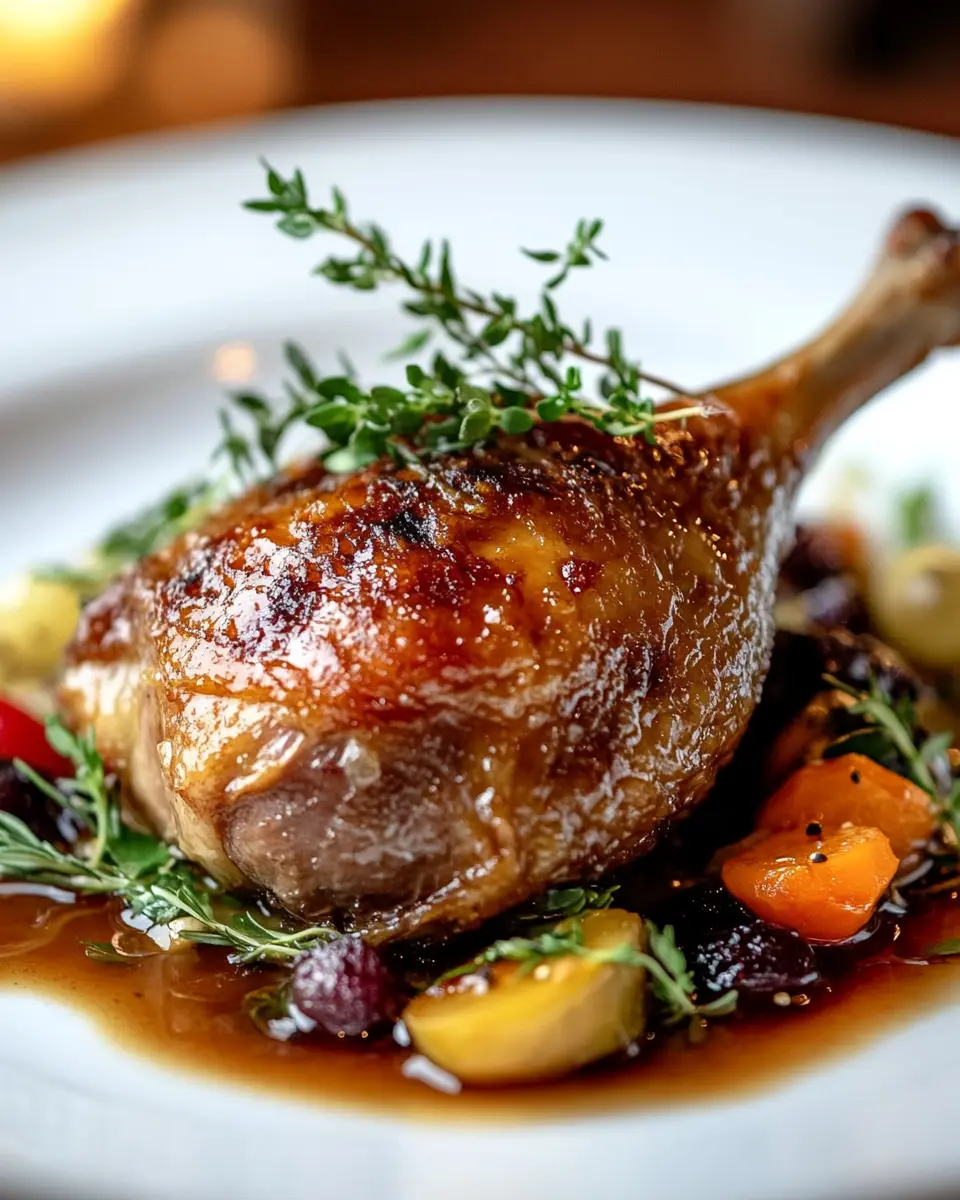
Cooking Tips and Notes
Duck leg confit in rendered duck fat is a delightful dish that benefits from a few helpful tips to ensure success in the kitchen.
Patience is Key
The secret to achieving tender, flavorful duck legs lies in patience. Allow the duck legs to marinate with salt, pepper, and thyme for at least 2 hours, but preferably overnight. This not only enhances the flavor but also helps to draw out excess moisture, making the confit process more effective.
Oven Temperature Matters
When cooking your duck, maintaining a low and slow approach is crucial. Preheating your oven to 225°F (107°C) allows the duck to cook gently, resulting in perfectly tender meat that falls off the bone. Avoid the temptation to increase the temperature, as this can lead to tough meat rather than the melt-in-your-mouth texture you desire.
Use the Leftover Fat Wisely
Don’t discard the rendered duck fat after cooking! It’s a culinary treasure that can be used for frying vegetables, potatoes, or even as a base for sauces. This not only enhances the flavor of your dishes but also maximizes the value of your ingredients.
In summary, by exercising patience, maintaining the right cooking temperature, and creatively using leftover fat, you can elevate your duck leg confit to a whole new level of deliciousness. Enjoy the process and the delightful results!
Serving Suggestions
Duck leg confit in rendered duck fat is a versatile dish that pairs beautifully with a variety of sides and accompaniments. Here are some delightful serving suggestions to enhance your dining experience.
Classic Accompaniments
For a traditional French approach, serve your duck confit with crispy, golden potatoes. Whether you opt for roasted potatoes or a classic potato gratin, the combination is sure to satisfy. A side of sautéed green beans adds a touch of color and freshness to the plate, balancing the rich flavors of the duck.
Fresh Salads
A light, refreshing salad can also complement duck leg confit well. Consider a simple arugula salad dressed with lemon vinaigrette to cut through the richness of the dish. Adding some sliced pears or apples can bring a sweet contrast that enhances the overall flavor profile.
Bread and Spreads
Don’t forget about crusty bread! A warm baguette or a rustic sourdough is perfect for soaking up the delicious rendered duck fat. You might also consider serving it with a spread like a tangy mustard or a rich garlic aioli, adding another layer of flavor to each bite.
In summary, whether you choose classic sides, a fresh salad, or some crusty bread, these serving suggestions will elevate your duck leg confit to new heights. Enjoy the delicious combination of flavors and textures!
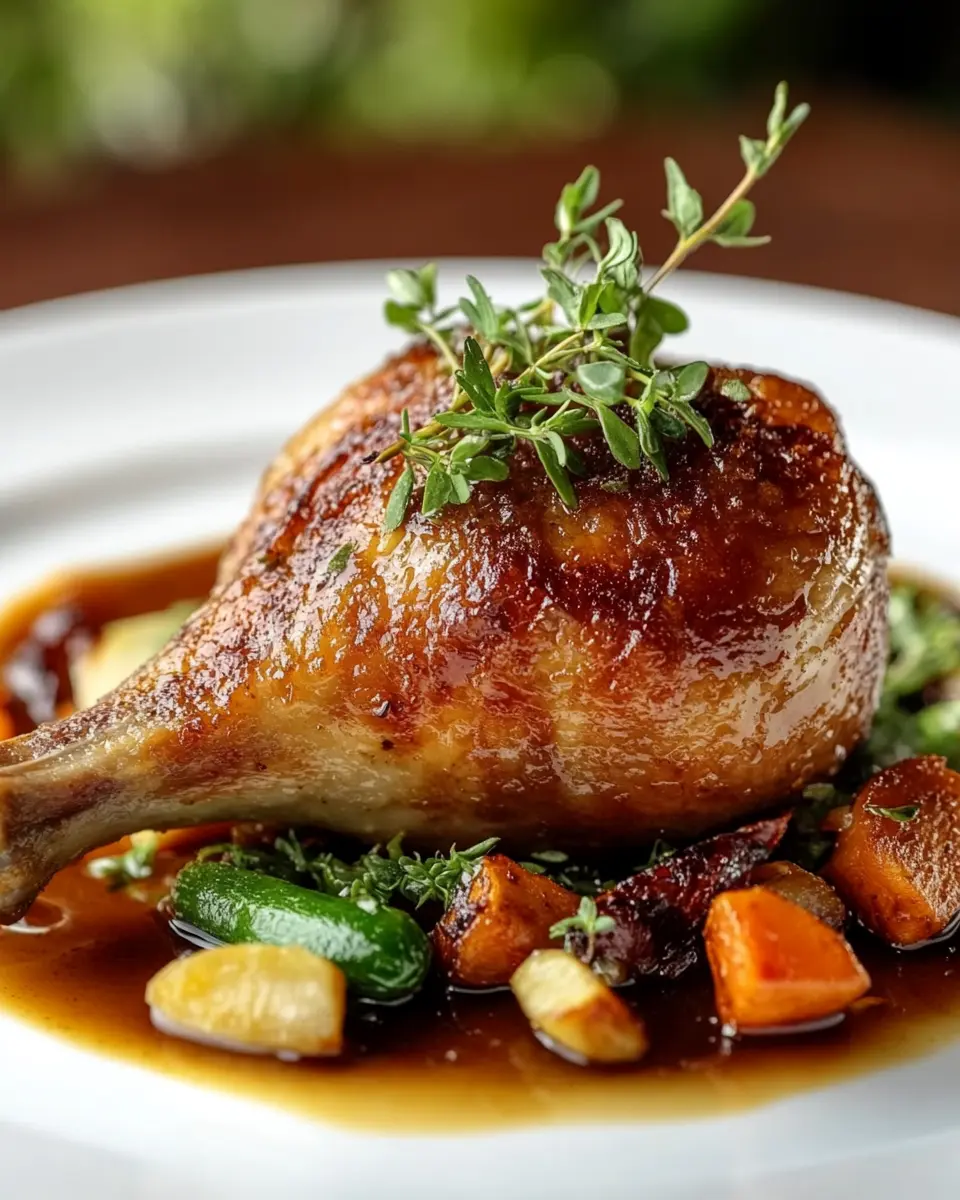
Time Breakdown
Preparing duck leg confit in rendered duck fat may take some time, but the results are well worth it. Here’s a quick overview of the time involved:
Preparation
Allow at least 2 hours for seasoning the duck legs, but let them sit overnight for even better flavor.
Cooking/Baking
The cooking time in the oven is approximately 2 to 3 hours at a low temperature, ensuring the duck becomes tender and flavorful.
Total
Overall, expect a total time of about 5 hours from start to finish, including preparation and cooking.
Efficiency Tip
To save time, consider preparing the confit a day in advance. It can be refrigerated and served later, allowing the flavors to deepen even more.
Nutritional Facts
Duck leg confit in rendered duck fat is not only a delicious dish but also a satisfying one. Each serving provides approximately 450 calories, making it a hearty option for any meal. The dish is rich in fat, containing 35g, which includes 12g of saturated fat and 18g of unsaturated fat.
With 30g of protein, it also offers a good source of this essential macronutrient, making it a filling choice for those looking to maintain energy levels throughout the day. Additionally, the dish is gluten-free, catering to those with dietary restrictions. Keep in mind that it has a moderate sodium content at 600mg, so consider this if you are watching your salt intake.
Enjoy this flavorful dish while appreciating its nutritional profile!
FAQ Based on “People Also Ask” Section
What is duck leg confit?
Duck leg confit is a classic French dish that involves slowly cooking duck legs in rendered duck fat. This method results in tender, flavorful meat that is both rich and satisfying. It’s a traditional technique used to preserve the duck while enhancing its natural flavors.
How long does it take to make duck leg confit?
The total time to prepare duck leg confit is about 5 hours, which includes 2 hours of preparation and 2 to 3 hours of cooking in the oven at a low temperature. The slow cooking process is essential for achieving the desired tenderness and flavor.
Can you make duck confit in advance?
Yes, duck leg confit can be made a day in advance and stored in the refrigerator. In fact, allowing it to sit overnight enhances the flavors. The confit can also be stored in the rendered duck fat for preservation.
How do you serve duck leg confit?
Duck leg confit can be served in various ways, such as with crispy potatoes, a fresh salad, or crusty bread. The rich flavors of the duck pair well with a variety of sides and sauces, making it a versatile dish for any occasion.
Is duck leg confit healthy?
While duck leg confit is rich in fats and calories, it also provides a good source of protein. Moderation is key, as it can be part of a balanced diet when enjoyed occasionally. The use of quality ingredients can enhance its nutritional value.
Conclusion
Duck leg confit in rendered duck fat is a culinary delight that brings the essence of French cuisine to your home kitchen. This dish transforms simple duck legs into a rich, tender masterpiece that is perfect for special occasions or a comforting weeknight dinner. The slow cooking process not only enhances the flavors but also preserves the meat, allowing you to enjoy it even days after preparation.
By following the straightforward recipe, you’ll discover how rewarding it is to create this classic dish. Whether enjoyed on its own or served with delightful sides, duck leg confit promises to impress your guests and tantalize your taste buds. So why wait? Gather your ingredients, savor the cooking process, and treat yourself to this exquisite dish. Cook, share, and enjoy the flavors of homemade duck confit!
Print
Duck Leg Confit in Rendered Duck Fat
- Total Time: 5 hours
- Yield: 4 servings 1x
- Diet: Gluten-Free
Description
A classic French dish that transforms duck legs into tender and flavorful confit with rendered duck fat.
Ingredients
- 4 duck legs
- 1 cup rendered duck fat
- 4 cloves garlic, smashed
- 1 tablespoon fresh thyme
- 1 tablespoon salt
- 1 teaspoon black pepper
Instructions
- Pat the duck legs dry and season with salt, pepper, and thyme. Let sit for at least 2 hours, preferably overnight.
- Preheat the oven to 225°F (107°C).
- In a deep baking dish, combine the duck legs, garlic, and rendered duck fat. Ensure the fat covers the legs completely.
- Bake in the preheated oven for 2 to 3 hours, until the duck is tender and the meat easily pulls away from the bone.
- Remove the duck legs from the fat and let them cool. Store in the fat if not using immediately.
Notes
- For best results, confit can be made a day in advance and refrigerated.
- Use the leftover fat for cooking vegetables or frying to add flavor.
- Prep Time: 2 hours
- Cook Time: 3 hours
- Category: Main Dish
- Method: Baking
- Cuisine: French
Nutrition
- Serving Size: 1 leg
- Calories: 450
- Sugar: 0g
- Sodium: 600mg
- Fat: 35g
- Saturated Fat: 12g
- Unsaturated Fat: 18g
- Trans Fat: 0g
- Carbohydrates: 0g
- Fiber: 0g
- Protein: 30g
- Cholesterol: 120mg




Leave a Comment